
#101: Searching, Searching...
A Review of Leila Aboulela's Bird Summons

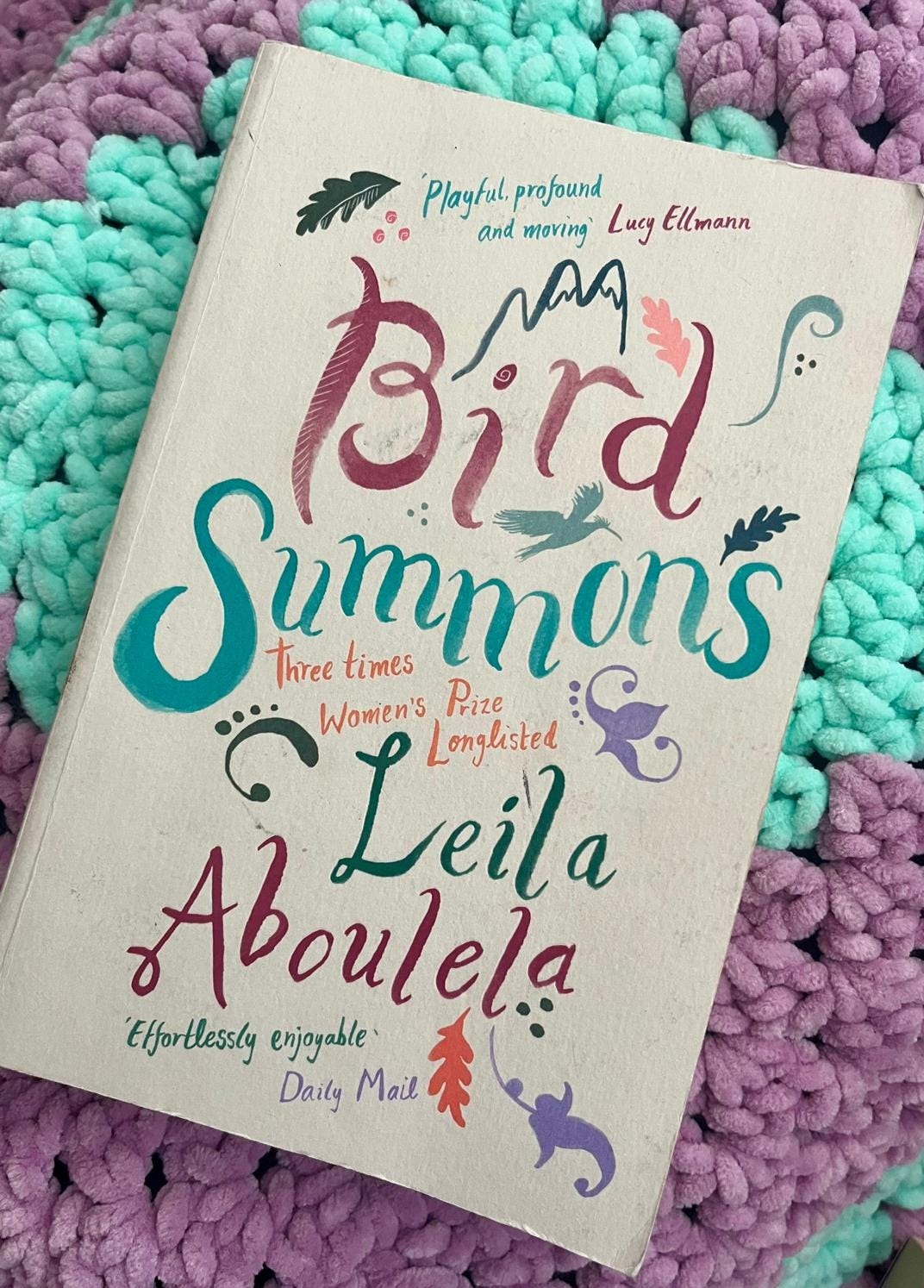
Bird Summons follows three women—Salma, Moni, and Iman—on a journey to the Scottish Highlands, where they planned to hike to the grave of Lady Evelyn, the first British woman to go on pilgrimage to Mecca. Salma, the leader of their Muslim women’s group, had planned the trip for a larger group, but people kept giving excuses and dropping out until it was only three of them left, so they included a week-long stay at a house by the loch.
Published in 2019, it’s the author’s fifth book. It’s such a beautiful use of allegory, where the author uses magical realism to narrate the characters’ journey of self-discovery, transformation, and how to better manage the demands of their lives.
“Iman fidgeted with the contents of her handbag but she was listening. She didn’t disagree with Salma but a sense of resignation was creeping in. Was that what life was about? Trotting after the carrot, if you were lucky enough to escape the stick. Fighting for what could be got by fighting. Otherwise waiting your turn with a smile.”
Greetings, dear reader👋🏽👋🏽
I hope you are doing well and taking good care of yourself.
Welcome to another edition of this spectacular newsletter.
Iman was a Syrian refugee who had lost everything and was far away from her family. She was with her third husband, who chased them down on their road trip to divorce her and give her all her belongings in his house. His excuse was that his parents didn’t approve, and he could not forgo his allowance from them. She was the most religious of the three women and the one who first encountered the Hoopoe, who told her different stories with guidance for her life and decisions.
“All in all there were twelve of them—boys and girls. Scattered now all over the place by the war and the ambition to live. Iman felt sorry for her mother, but her pity was tempered with anger. Anger at her and anger for her. If having all these children was an investment for old age, then it was an investment that had backfired.”
For Moni, a vacation was out of the ordinary, a luxury even. She was the primary carer for her son, Adam, who had special needs. Her husband, Murtada, had moved away for work and had been pressuring her to join him. She resented him deeply for being able to move on and have a life outside of her and Adam, whom she had given up her job at a top bank to care for. Moni had never left Adam, and the guilt of taking him to a nursing home for the few days she would be away sat with her throughout the journey.
“It was the children who caught her eye. A toddler held by a harness. Two little girls holding hands. Healthy, moving, standing, talking to their parents. They were the same age as Adam, but they had swept past him, developed and progressed. For Adam, time was different. For Adam, time did not bring news kills or better understanding. She had forgotten what was natural, forgotten what normal children were like, what they were capable of doing and saying outside the cocoon of Adam’s world.”
Salma was the most successful of the trio. She worked as a massage therapist and was the organiser of the Muslim women's group in Aberdeen. She gave up her life and career as a doctor in Egypt to build one with David, her Scottish husband, and a convert. Salma has four children and struggles to remain relevant in their lives. Most of the time, in her English-speaking household, she feels like an outsider. During the trip, she flirts with Amir, her former love and the person she was supposed to marry back in Egypt. He had resurfaced and reached out to her on social media just before the trip, a stark reminder of the life she sacrificed.
“And Salma was the one with the Scottish husband, she was the one who must always be making the effort to belong. Digging deeper all the time, craving connections, self-conscious that her roots, despite the children, might not be strong enough.”
Away from the buzz of the city and the demands of their daily lives, the women experience spiritual freedom and surreal manifestations of the danger ahead. The consequences of their life choices take tangible shapes that guide and warn them. Each woman is at a crossroads, faced with choices they had made, the crises in their marriages, and the war within themselves.
They were women with wants, desires, hopes, and aspirations, but somehow, they had put everything else above themselves. They had let the demands of their faith and families weigh them down. The trip also tests their friendship, and they have to ask and answer difficult questions.
“They misunderstood their role. They underestimated their importance and exaggerated their shortcomings. They inflated their problems and followed their egos, counselled each other but rejected what was right. Their quarrels taking up space, their connections weakening. And now they were far away, deep in the realm of consequence.”
This book is not your regular read; it poses questions for deep reflection to the readers. The author does an amazing job of examining faith and the lives of these women, who are more than the image their headscarves represent. They were on a journey to a sacred place, but did they, by doing so, travel to themselves?
Have you read this book? What did you think about it? If you enjoyed reading this post, it would be great if you could tap the heart to help it reach more people. You can also leave a comment and share it with your friends. See more about what I’m reading and my other hobbies on X, Instagram, or TikTok.
#100: All Alone In The World

Little Pa is an emotional coming-of-age short story following Zacharias, a young boy growing up in Cameroon. He has questions about his identity, family, and belonging that he suppresses to protect himself and his mother, Dorothée, who struggles with depression. He was named after his maternal grandfather, hence the nickname, but he has never met him or…